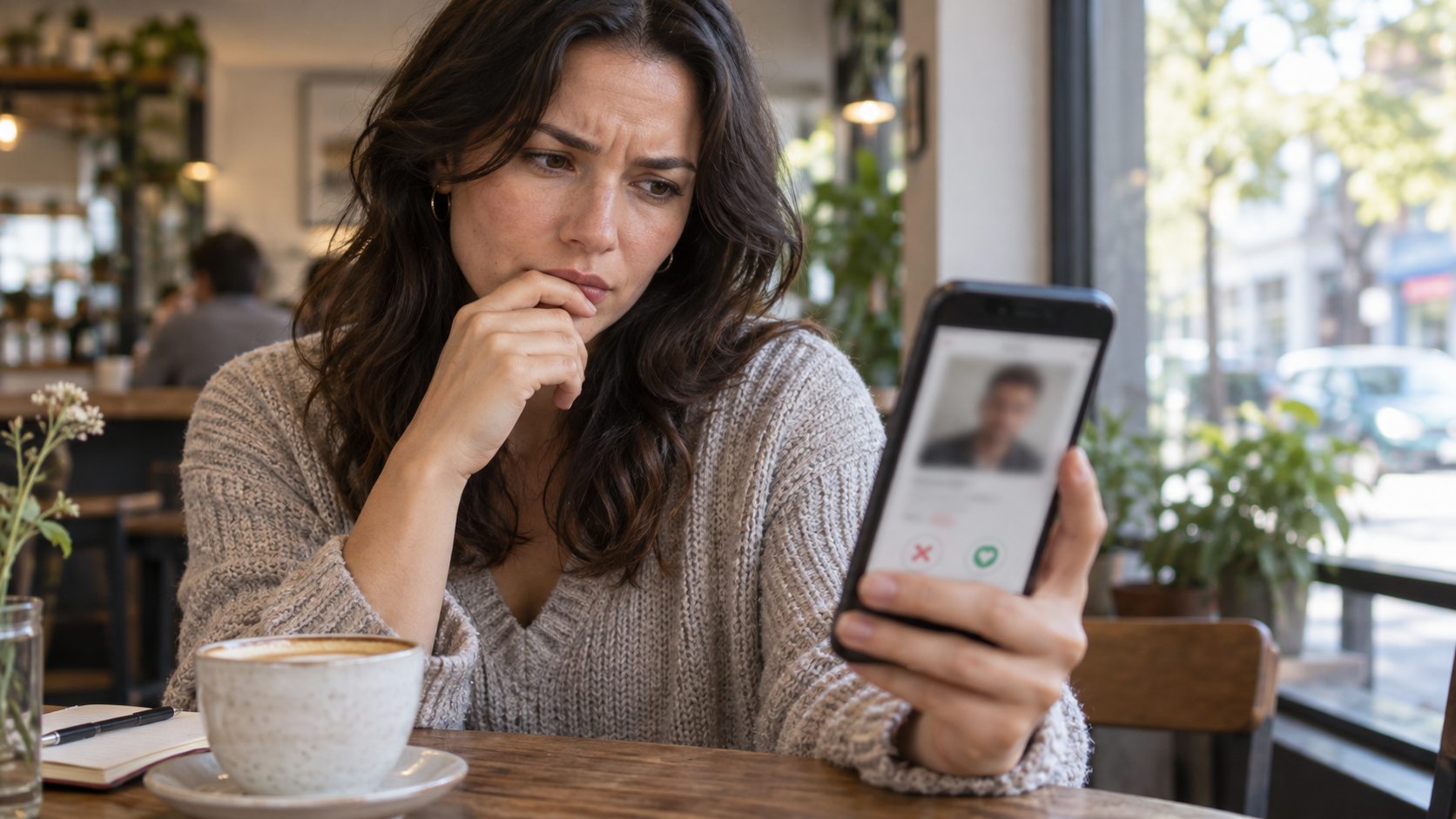
A fake dating profile may use stolen photos, false identity details, or a fabricated life story to gain attention or money. No single awkward message proves a person is fake. Look for a pattern: details that do not match, rapid pressure to move off the app, repeated excuses for never meeting, and eventually requests for money or access to accounts. If you see financial pressure, stop engaging and report it.
The U.S. Federal Trade Commission warns that romance scammers often move conversations off a platform, claim distance or emergencies, and ask for money. It suggests checking a profile picture with reverse image search and reporting suspicious accounts. Those are concrete steps, but a clean search result cannot verify someone is genuine. Photos can be new, private, or generated.
Check the story without conducting an investigation
Notice whether the person's name, location, occupation, and availability stay reasonably consistent. People make typos and may protect some privacy early in dating. Ask ordinary questions about a detail they volunteered: “You mentioned working nights; what does a typical week look like?” A person who repeatedly changes the story or avoids simple clarification may deserve caution. Do not demand government ID, home address, or private documents from a stranger, and do not send yours.
Use a reverse image search on publicly visible profile photos if something feels off. An image appearing with another name or on a stock-photo site is a reason to pause. A matching social profile is not proof either; scammers can copy multiple accounts. Do not upload private images of someone to unfamiliar services or post accusations based on a search result.
Watch the direction of the conversation
A scammer may quickly ask to move to a private messaging service, express intense attachment, or present an urgent problem. None of these alone is conclusive; together with evasive identity details, they can form a warning pattern. Ask for a normal, low-pressure way to keep talking within the app until you are comfortable. If the person insists that leaving the platform is a test of trust, treat the pressure itself as information.
Be especially cautious if someone claims they cannot meet or video chat for a long period but asks you to treat the relationship as exclusive or secret. A video call can add context but is not a full identity check. Do not share intimate images, passwords, verification codes, or financial details as a condition of proving you care.
Money requests are a clear stop signal
The FTC advises never sending money or gifts to an online love interest you have not met in person, particularly through gift cards, wire transfers, or cryptocurrency. Treat an emergency story, travel ticket request, investment opportunity, or request to receive and forward money as a serious warning. Do not send a small “test” amount. A persuasive narrative does not make a payment safe.
If you already paid, contact the payment company immediately and ask whether a reversal or fraud process is available. Preserve messages, payment details, and the profile URL for reporting. Tell a trusted person what happened; shame can make it harder to act quickly. The FTC provides reporting through ReportFraud.ftc.gov, and the dating platform should also receive a report.
Make verification proportional
You do not need to conduct a background investigation on every match. Keep early conversation on the platform, compare the person's account with what they say, and move toward an ordinary public meeting only when you feel comfortable. Tell a trusted person where you are going and arrange your own transportation. Those precautions help with both genuine strangers and fake profiles. A person who respects your pace should not require you to abandon them. If you notice a mismatch, ask once for clarification; if the answer stays evasive, you can stop without proving fraud to a courtroom standard.
Report without confronting
Use the app's report and block tools. Describe observable behavior: requests for a wire transfer, a photo linked to another identity, or a repeated false location. Avoid public naming or sending threats. The platform and authorities can assess the evidence. If you are being threatened or extorted, prioritize immediate safety and appropriate local help.
Our dating app safety checklist covers meeting logistics, privacy, and account precautions more broadly. This guide focuses on profile verification and scam response. A healthy match will not demand that you ignore reasonable safety steps to prove trust.